
A modular motorcycle helmet gives you the protection of a full-face helmet with a flip-up chin bar, so you can grab a coffee, talk to a gas station attendant, or clear a fogged visor without pulling the whole thing off. For years modular motorcycle helmets were the compromise choice: heavier, noisier, and less structurally sound than a true full-face lid. That gap has closed fast. The five modular motorcycle helmets below cover everything from a budget commuter option to a premium touring helmet that rivals dedicated full-face performance, so there’s a real pick here whether you’re outfitting a daily commute or a cross-country trip.
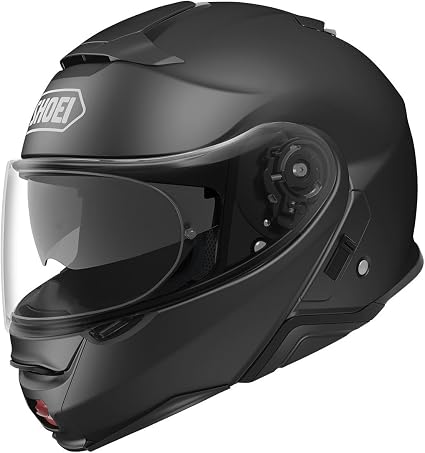
1. Shoei Neotec II: Best Overall
The Shoei Neotec II is the modular helmet other modular helmets get compared against, and it earns that reputation. The AIM shell (Shoei’s Advanced Integrated Matrix) keeps weight reasonable at 4.1 pounds while delivering some of the best noise control in the modular category, helped by an aerodynamic chin bar deflector and a vortex generator lip that manages wind noise at highway speed. A built-in QSV-1 sun shield drops down with one switch, the chin bar and shield rotate on a smooth eccentric-axis hinge, and the whole thing is DOT-218 certified. It’s also designed for direct integration with Sena’s SRL2 communication system if you want comms added later instead of built in.
Riders consistently point to the fit, finish, and quiet ride as the reasons it’s worth the price. This is the pick for someone doing serious mileage who wants a helmet that performs like a full-face and flips open like a modular.
2. HJC i91 Solid: Best Value
The HJC i91 is the modular helmet for riders who want most of the premium experience without the premium price. It’s DOT approved, ships with an HJ-33 Pinlock-ready shield to kill fogging in cold or wet weather, and earns strong owner feedback based on genuine ride quality rather than just a low price tag. HJC has spent two decades refining shell construction at this price point, and it shows: the fit is stable, the vents actually move air, and the chin bar latch feels secure rather than flimsy, which is the usual failure point on budget modulars.
If your riding is mostly commuting and weekend trips rather than multi-day touring, this is very likely the better dollar-for-dollar buy than stepping up to a $500+ helmet.
3. LS2 Advant with Integrated Cardo 4X Bluetooth: Best for Built-In Comms
Most modular helmets make you buy a separate Bluetooth unit and mount it yourself. The LS2 Advant skips that step by building a Cardo 4X communication system directly into the shell, so intercom, music, and GPS prompts are ready out of the box with no external hardware to bolt on or lose in a crash. The shell itself holds up its end too, with a 180-degree chin bar rotation that lets it function as an open-face helmet, not just a flip-up full-face.
This is the pick for riders who want comms without the usual hassle of retrofitting a headset into a helmet that wasn’t designed for one.
4. ILM 953: Best Budget Bluetooth
The ILM 953 undercuts the LS2 Advant by more than half while still packing Bluetooth 5.0, an 8-hour talk time, and roughly 1,680 feet of intercom range, DSP noise cancellation included. It’s DOT certified, the liner is washable, and it’s not a niche budget gamble, it’s a helmet a lot of riders have actually put miles on.
This won’t out-quiet a Shoei on the highway, but for a rider who wants built-in comms on a tight budget, it’s the most complete package in its price range.
5. CYRIL Modular: Best Budget
At its low price, the CYRIL modular is proof that a genuinely usable modular helmet doesn’t require a three-figure spend. It’s DOT approved, weighs a light 3.6 pounds, and ships with three visors including an extra smoke shield, plus a carrying bag. It’s intercom ready if you want to add comms later, and it’s eyewear friendly, which matters more than most budget helmets acknowledge.
Don’t expect Shoei-level noise control or ventilation at this price. What you get instead is a legitimate, DOT-certified modular helmet for less than the cost of a tank of gas on some bikes, and for a backup helmet, a loaner, or a rider just getting started, that’s a fair trade.
Modular vs. Full-Face: Which Do You Need?
A full-face helmet is still the stronger choice on pure protection and noise control since it has no hinge, no chin bar seam, and one less point of failure. If you ride mostly in hot weather and want maximum airflow and the lightest possible shell, our guide to the best motorcycle helmets for hot weather covers that side of the decision.
A modular helmet trades a small amount of structural simplicity for real convenience: flipping the chin bar up at a gas stop, on a toll line, or mid-conversation without removing the whole helmet. If comms matter to your decision either way, it’s worth cross-checking our best motorcycle Bluetooth intercoms guide, since two of the picks above (the LS2 Advant and ILM 953) already have Bluetooth built in and won’t need a separate unit.
Final Thoughts
For most riders, the HJC i91 hits the sweet spot of price and quality. If you’re logging serious highway miles and want the quietest ride possible, the Shoei Neotec II is worth the jump. Want comms without the retrofit hassle? Go LS2 Advant if budget allows, ILM 953 if it doesn’t. And if you just need a real DOT-certified modular helmet without spending real money, the CYRIL gets the job done.
Disclosure: This post contains affiliate links. As an Amazon Associate, Helmet and Wheel earns from qualifying purchases at no extra cost to you. See our Affiliate Disclosure for details.